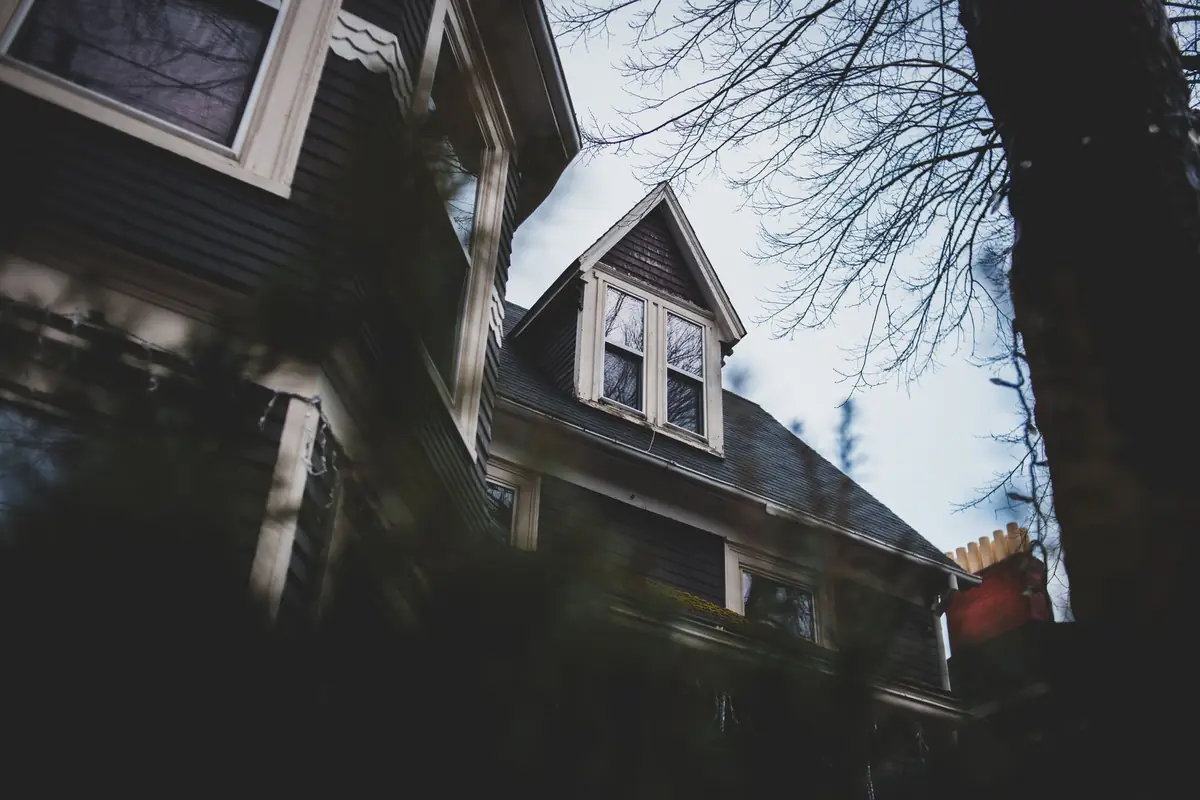
What fascia and soffit do
The fascia is the vertical board along the roof edge, under the shingles. Gutters attach to it. The soffit is the horizontal panel under the roof overhang, often vented to let air into the attic. Together they close off the roof edge from weather, birds, squirrels and insects.
On many older Warren, Royal Oak and Madison Heights homes, fascia is painted wood. Some has been wrapped in aluminum, which hides rot until it is advanced.
Signs of rot
- Peeling or blistering paint on the fascia.
- Dark stains or green growth on the board.
- Soft spots when pressed with a screwdriver.
- Gutters pulling away, or hangers that will not hold.
- Gaps between the fascia and the roof edge.
- Bent or bulging aluminum wrap.
- Squirrels, birds or wasps entering at the roof edge.
- Water stains on soffits or in the attic near the eaves.
Why fascia rots
Overflowing or leaking gutters. Water spilling over the back of a clogged gutter soaks the fascia every rain.
Missing drip edge. Without drip edge flashing, water runs off the shingles and behind the gutter, wetting the fascia.
Ice dams. Meltwater trapped behind ice at the eaves can back up under shingles and soak the roof edge. See ice dams and gutters.
Aluminum wrap traps moisture. Wrap installed over wet or already-damaged wood keeps it from drying.
Age. Decades of Michigan weather wear out paint and wood.
Why it matters
- Gutters cannot hold onto soft wood and will sag. See sagging gutters.
- Water can move into roof sheathing, rafter tails and wall framing.
- Gaps invite squirrels, raccoons, bats and birds into the attic.
- Damp wood in the attic edges can grow mold. See the EPA's mold and moisture guide.
What repair involves
- Gutters are taken down along the damaged section.
- Rotted fascia is cut out and replaced with new lumber, often primed pine, or with PVC or composite boards that do not rot.
- Rafter tails and sheathing behind the fascia are checked. Damaged wood is repaired.
- Drip edge is added or corrected.
- Fascia is painted or wrapped in aluminum, ideally only after confirming the wood is dry and sound.
- Gutters are reinstalled with hidden hangers, sloped correctly, or replaced.
Soffit and attic ventilation
Soffit vents let air into the attic, which helps keep the roof deck cold in winter and reduces ice dams. When soffits are replaced, vented panels and clear baffles in the attic keep that airflow working. Blocked soffit vents are a common contributor to ice dams on Metro Detroit homes.
Wood, PVC or wrapped
- Wood: least expensive, needs paint, can rot again if water is not controlled.
- PVC or composite: does not rot, holds paint well, costs more.
- Aluminum wrap: low maintenance, but hides problems underneath.
Prevention
- Keep gutters clean and flowing.
- Make sure drip edge directs water into the gutter.
- Fix leaking seams promptly. See leaking seams.
- Address ice dams with insulation and ventilation.
- Repaint exposed wood fascia before paint fails.
Questions to ask a contractor
- How much fascia needs replacing, and what is behind it?
- What material will replace it?
- Will drip edge be added or corrected?
- Will gutters be reinstalled or replaced?
Squirrels and the roof edge
In mature neighborhoods across Warren, Royal Oak and Madison Heights, squirrels are a constant. They chew into softened fascia and soffit corners, especially where a gutter end cap leaks and the wood behind it has gone soft. Once inside, they nest in attic insulation, chew wiring and leave openings that let in more water and other animals. If you hear scratching above the ceiling in the morning or evening, check the roof corners from the ground for holes or chewed edges. Repairs usually combine wildlife exclusion, fascia replacement and fixing the leak that softened the wood in the first place. Wildlife removal is a separate trade; ask whether the gutter contractor coordinates with one.
Painting tips for wood fascia
If you keep wood fascia, prime all sides and cut ends of new boards before installation, use exterior-grade paint and recoat before the paint starts to peel. End grain at corners is where rot usually starts.
Calls connect to independent gutter contractors serving Southwest Warren, Northeast Warren, Madison Heights and Royal Oak.
If your fascia shows signs of rot, ask for a written quote that lists the length of fascia, material and gutter work separately.
Related services
Questions homeowners ask
How do I know if my fascia is rotted?
Peeling paint, dark stains, soft spots, gutters pulling away and gaps at the roof edge are common signs.
Can gutters be reinstalled on rotted fascia?
Not reliably. Rotted fascia should be replaced first, or the hangers will pull out.
Is aluminum fascia wrap a good idea?
It reduces maintenance, but it should only go over sound, dry wood, since it can hide and trap moisture.
Does fascia rot cause pest problems?
Yes. Gaps at the roof edge let squirrels, birds, bats and insects into the attic.
General information for homeowners, not legal, insurance, health or other professional advice. Conditions in your home may differ; the provider who inspects it has the final word.