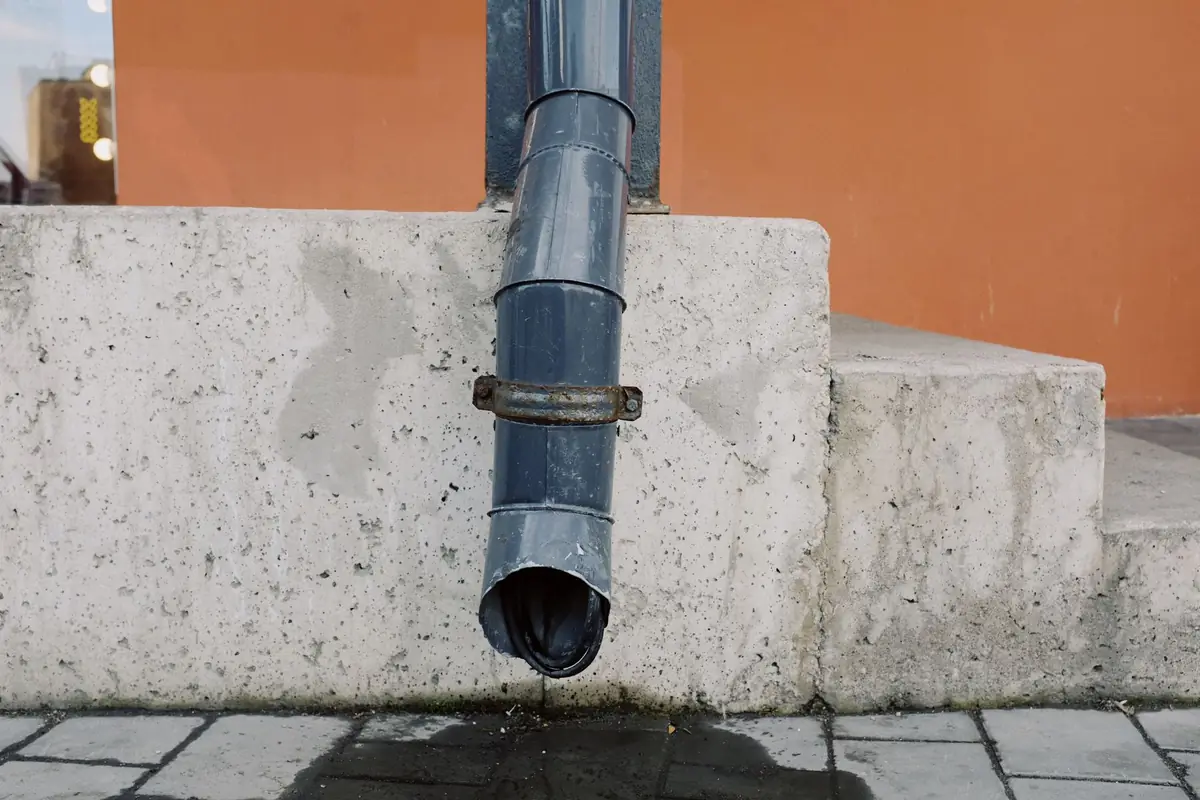
Where those pipes go
Older homes in Warren, Center Line and much of Metro Detroit often had downspouts connected to clay or cast iron pipes that drained toward the footing drains or the sanitary or combined sewer. Newer setups often use corrugated or PVC pipe running to a pop-up emitter in the yard or to a ditch. Some Metro Detroit communities have encouraged or required disconnecting downspouts from the sewer to reduce basement backups and sewer overflows; check current rules with the City of Warren before changing a connection.
Signs of a clogged or broken drain
- Water backing up and overflowing at the top of the downspout boot during rain.
- Water bubbling out of the ground near the downspout.
- A pop-up emitter that never opens.
- A wet basement wall near a downspout location, especially after heavy rain.
- Sinkholes or soft, sunken soil along the pipe's path.
- Gutters overflowing even when clean.
Why buried drains fail
Debris. Leaves, seeds and shingle grit wash down the downspout and build up at bends.
Roots. Tree roots find joints in older clay pipe and grow into them.
Collapse. Old clay pipe cracks, and corrugated pipe crushes under vehicles or settles.
Ice. Water sitting in a shallow pipe can turn to ice in winter and block flow.
Grade. Pipes that sag or run uphill hold water and debris.
How to test
On a dry day, run a garden hose into the downspout at full flow for a few minutes. If water backs up at the top, the pipe is blocked. If water does not appear at the outlet, it is blocked or broken, or it drains to a connection you cannot see. A contractor or plumber can run a camera through the pipe to locate the problem.
How it gets cleared
- Flushing from the top or outlet end can clear loose debris.
- Drain snake or auger breaks up packed debris and small roots.
- Hydro-jetting uses high-pressure water for heavier buildup in rigid pipe. It can damage thin corrugated pipe.
- Excavation and replacement is needed for collapsed pipe or heavy root intrusion.
When to reroute above ground
Often the most reliable fix is to disconnect the downspout from the buried pipe, cap the old pipe and add an above-ground extension that carries water at least several feet from the foundation onto ground that slopes away. This is simple, visible and easy to maintain. The EPA Soak Up the Rain program discusses redirecting downspouts to lawns and rain gardens.
Make sure the discharge does not flow onto a neighbor's property, a sidewalk where it will ice or back toward your foundation.
Prevention
- Install a downspout filter or cleanout at the top of the buried pipe.
- Keep gutters clean so less debris enters the pipe.
- Use smooth-wall pipe rather than corrugated where possible.
- Slope pipe continuously to the outlet.
- Keep pop-up emitters clear of grass and mulch.
Connection to basement water
Most homes in Warren have basements, many from the 1940s to 1960s. A clogged buried drain can dump all the water from a roof section against one spot of foundation wall. If one basement corner gets wet in heavy rain, the downspout above it is a prime suspect. See downspouts and basement water and downspouts and drainage.
Questions to ask
- Where does this pipe actually drain?
- Is it cleanable, or does it need replacing?
- Would an above-ground extension work better here?
- Are there city rules about sewer connections?
Footing drains and older basements
Many older Metro Detroit homes have footing drains around the base of the foundation, meant to carry groundwater away. On some houses, the downspouts were tied into the same system. When roof water floods the footing drains during heavy rain, it can overwhelm them and push water through basement walls or up through the floor near the edges. Disconnecting downspouts from footing drains and carrying roof water away above ground reduces that load. If you have a sump pump, note how often it runs during storms before and after the change; fewer cycles is a good sign that roof water is no longer reaching the footing drains.
Winter considerations
Above-ground extensions can be bumped by snow shovels and plows. Hinged extensions that flip up for mowing and shoveling, or splash blocks set flush with the lawn, survive winter better.
Calls connect to independent gutter contractors serving Northwest Warren, Southeast Warren, Center Line and Sterling Heights.
If water backs up at a buried downspout, ask for a written quote that explains where the pipe goes and whether clearing, replacement or rerouting is recommended.
Related services
Questions homeowners ask
How do I know if my underground downspout is clogged?
Water backing up at the top of the downspout, a pop-up emitter that never opens or water bubbling out of the ground are common signs.
Can a clogged downspout drain cause basement leaks?
Yes. Water that cannot drain away collects against the foundation and can seep into the basement.
Should I disconnect my downspouts from the sewer?
Many communities encourage it. Check current rules with your city before changing a connection.
Is it better to run downspouts above ground?
Often yes. Above-ground extensions are easy to see and maintain, as long as water is carried well away from the foundation.
General information for homeowners, not legal, insurance, health or other professional advice. Conditions in your home may differ; the provider who inspects it has the final word.